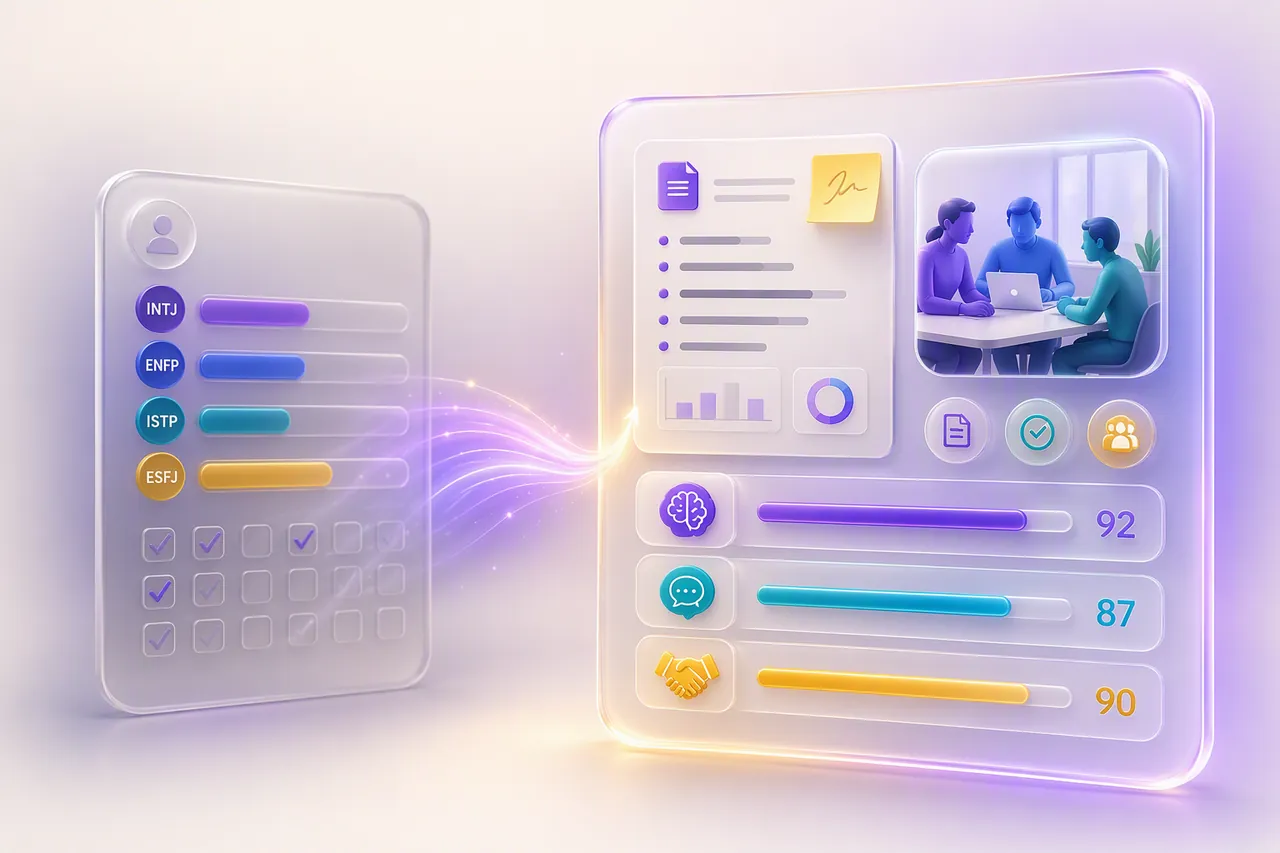
Phone screen vs self-paced screening
cost, science, and what works
By WiseWorld
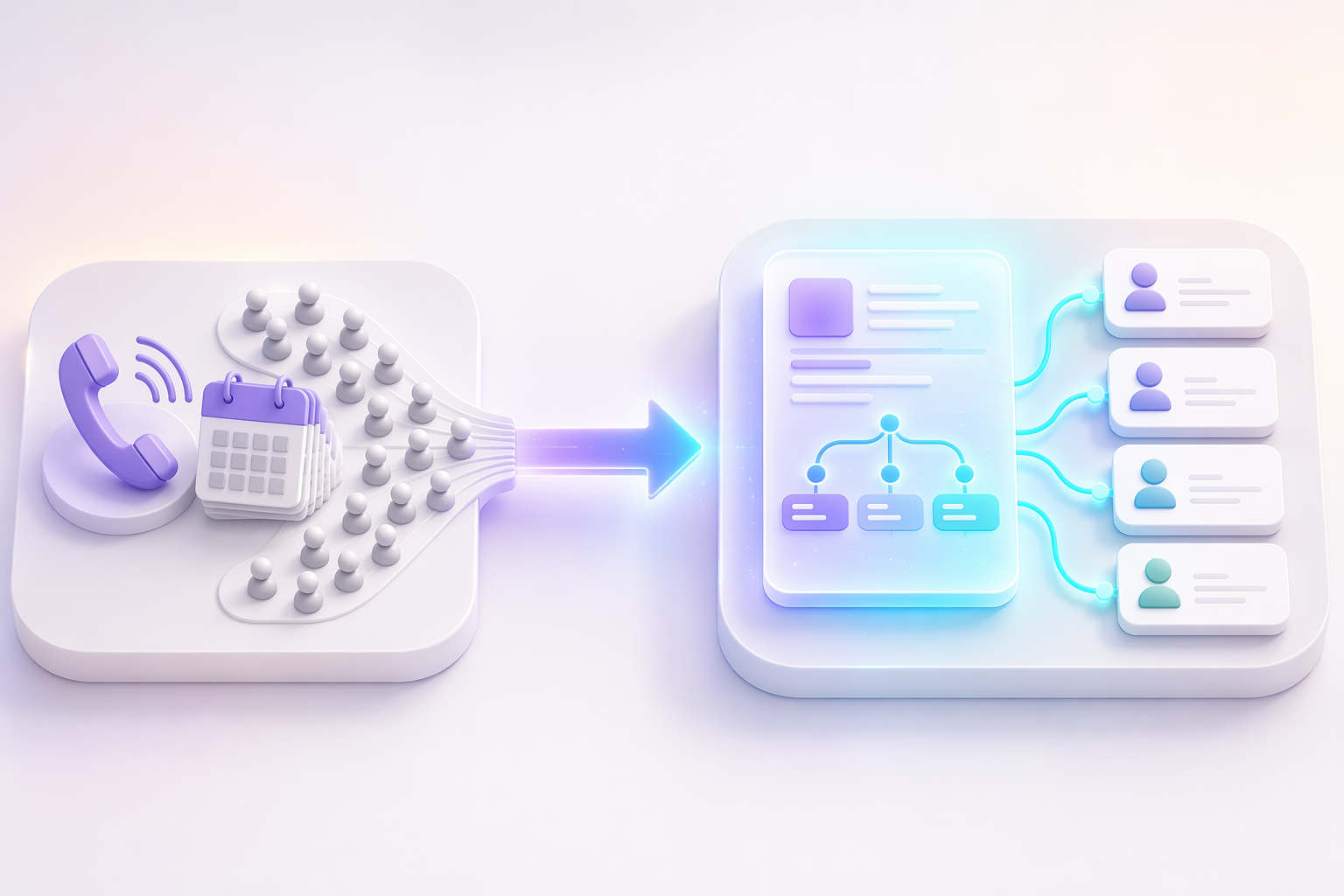
Should you replace phone screens? Twenty live phone screens cost about $585 in recruiter time; sorting twenty self-paced submissions takes roughly eight minutes ($6). Phone screens ask people to describe skills. Async video is still questions. A self-paced job scenario shows how they use the skills as they do the work. Unstructured calls predict performance at about 0.19; realistic job tasks finish near 83% versus 55% for typical one-way video.
Phone screen vs self-paced screening: which should you use?
Most hiring teams still start with a phone call. Twenty minutes, the same three questions, a gut feeling, and a note in the ATS. It made sense when manager time was the scarce resource. Today the scarce resource is recruiter time, and the phone screen spends it on one of the weakest signals in hiring research.
Tools with no live call promised a fix. Record a video answer on your own schedule. No calendar ping-pong. Review ten candidates before lunch. That shift started with one-way video in the early 2010s and accelerated when remote hiring removed the in-person first round.
After a resume looks good, most teams pick one of three paths: a live phone screen (they describe skills), a recorded video interview (still questions), or self-paced work from the role (you see how they use the skills as they do the job). The numbers on cost, completion, validity, and candidate drop-off diverge fast.
Phone screen vs self-paced screening: headline statistics
Key numbers on recruiter cost, time, and scheduling pain for live phone screens.
- $585: Recruiter cost to phone screen 20 people
- 10 hrs: Recruiter hours on 20 live phone screens (before scheduling)
- 67%: Recruiters who say scheduling eats the most time
Key findings on phone screen vs self-paced screening
Phone screens protect manager time but eat recruiter hours; recorded video fixes calendars but drops completion; self-paced job scenarios keep speed with stronger signal.
- Phone screens exist to protect hiring manager time. They eat recruiter time instead, and they are among the weakest ways to tell who will perform.
- Recorded video fixed scheduling. It created a new problem: nearly half of candidates never finish, and 38% quit once an AI interview is required.
- Self-paced job scenarios (candidates complete work on their own time, you review later) keep the speed of no-live-call screening but raise completion to about 83%. You see how they use the skills as they do the job, which is harder to rehearse than a questionnaire.
- For 20 qualified candidates, live phone screens cost roughly 10 recruiter hours plus scheduling. Sorting self-paced submissions to see who matches takes about eight minutes.
- Brain and stress research helps explain the gap: talking on a phone feels familiar. Recording yourself for a black-box score triggers stronger threat responses.
Questions this guide answers
Cost, validity, completion, and candidate drop-off for phone screens vs recorded video vs self-paced job scenarios.
- Should you replace phone screens with self-paced screening?
- How much does it cost to phone screen 20 candidates?
- What is a self-paced job scenario?
- Do phone screens predict who will do well on the job?
- Why do candidates drop out of one-way video interviews?
- How do I shortlist candidates without phone screening everyone?
- When should you replace phone screens?
Where phone screens came from
Before applicant tracking systems, the phone screen was simply how a recruiter learned whether someone could hold a conversation. It moved to scale in the 1990s and 2000s when corporate hiring grew and hiring managers refused to meet everyone who looked good on paper.
The logic was sound. Manager hours cost more than recruiter hours. Someone had to filter. The phone was cheap, familiar, and human. Candidates knew how to answer. Recruiters could hear tone, check communication, and catch obvious mismatches.
What changed is volume. LinkedIn and job boards turned one posting into hundreds of applications. Scheduling a 25-minute call with each qualified person stopped being a filter and became a second job. Industry surveys still put scheduling and rescheduling among the top time drains for recruiters, often 15 hours or more per week.
Recruiters we read in case studies and review sites describe the phone screen as calendar Tetris: time zones, no-shows, the same behavioral question fifteen times in a row. The human feel remains. The efficiency does not.
How phone and self-paced screening entered hiring
Timeline from live phone screens through one-way video to job scenarios.
- 1970s–80s: Phone screen. Recruiters filter before the manager meets anyone.
- 1990s: Structured phone guides. Same questions, still live on a call.
- 2012: One-way video (HireVue). Record answers, review later, no calendar.
- 2015–19: Recorded video at scale. Enterprise volume hiring adopts the format.
- 2020: Remote hiring surge. COVID removes in-person first rounds.
- 2023+: AI on both sides. AI scores recorded video; candidates use AI on applications.
- 2025–26: Voice + job scenarios. Teams mix no-live-call speed with tasks tied to the role.
What is a self-paced job scenario?
A self-paced job scenario is work built from the role that candidates complete on their own schedule; recruiters review later without booking a live call. You see how they use soft skills as they do that job. It keeps the no-calendar benefit of recorded video but is not another questionnaire or camera prompt.
One-way video interviews arrived around 2012 with platforms like HireVue. The pitch was simple: candidates record answers to fixed questions; recruiters watch later. Unilever and other large employers adopted the format for graduate hiring and reported cutting months from their process.
Recorded video solved scheduling. It also changed what candidates experienced. Instead of a conversation, they got a recording booth and, in many cases, a score they never saw explained. Adoption grew through the 2010s. COVID made it normal. AI scoring arrived next.
The newer branch swaps generic video prompts for work from the job: they write, create, hand off. Recruiters review later. No live call. Our pre-interview behavioral assessment guide explains how to run it.
A 2026 field experiment with more than 3,000 applicants found that recorded interviews alone can cut application continuation by more than half, including among strong candidates. Women dropped off more than men. The format saves employer time. It also filters out people who will not perform on camera or who distrust the process.
Phone screen vs self-paced screening: side by side
Talent acquisition teams trade five things after resume screening: recruiter hours, calendar load, prediction, completion, and how easy the step is to rehearse.
Phone screen vs recorded video vs self-paced job scenario
Side-by-side comparison on recruiter time, validity, completion, stress, and best fit.
- Recruiter time (20 candidates). Phone: ~10 hours live + ~3 scheduling. Recorded video: ~2–3 hrs (watch each answer). Self-paced job scenario: ~8 min to sort who matches.
- Calendar coordination. Phone: Heavy. Recorded video: None. Self-paced job scenario: None.
- Predicts job performance. Phone: Weak (~0.19). Recorded video: Mixed. Self-paced job scenario: Stronger (~0.26–0.29).
- Candidate completion. Phone: ~75–80%. Recorded video: ~40–68%. Self-paced job scenario: ~83%.
- Candidate stress (research). Phone: Moderate. Recorded video: High (camera + black box). Self-paced job scenario: Moderate (job task).
- Handles high volume. Phone: Poor. Recorded video: Good. Self-paced job scenario: Good.
- Easy to prepare for. Phone: Yes (polished stories). Recorded video: Yes (rehearsed answers). Self-paced job scenario: Harder (built from your job).
- Best fit. Phone: Low volume, relationship roles. Recorded video: High volume, early filter. Self-paced job scenario: After resume, before manager.
Phone screens feel personal but do not scale. Recorded video scales but loses candidates. Self-paced job scenarios keep volume without giving up as much completion when the task is tied to the role.
Why do candidates drop out of one-way video interviews?
Recruiters and candidates want the same hiring outcome. They describe the path differently. Recruiters rank time savings and calendar relief at the top when they adopt tools that skip the live call. Candidates rank fairness, control, and whether a human ever sees their effort.
What recruiters report about screening methods
Survey synthesis indexed 0–100. Higher means the theme comes up more often in recruiter feedback.
- Scheduling eats the most time: 67
- No-live-call saves screening time: 78
- Phone gives a human feel: 54
- Video scales without calendars: 71
- Weak signal from phone stories: 48
What candidates report about screening methods
Survey synthesis indexed 0–100. Higher means candidates mention it more often.
- Prefer a live conversation: 61
- Quit when AI interview required: 38
- Phone feels normal: 72
- Recording on camera is stressful: 64
- Finish realistic work tasks: 83
Greenhouse's 2026 candidate research found that 38% of applicants withdrew when an AI interview was required. 61% said they would prefer a live conversation. Phone screens still feel normal to most people. Recording yourself for a one-way video often feels like an audition with no audience.
The International Journal of Selection and Assessment (2025) asked candidates to rate how acceptable different methods feel. Real work tasks scored highest. AI interviewers scored lowest. Phone screens sat in the middle: familiar, but not especially liked.
How acceptable each method feels to candidates
IJSA 2025 favorability scale (1–7). Higher is better.
- Real work task: 5.04/7
- In-person interview: 4.91/7
- Realistic scenario: 4.65/7
- Phone screen: 4.2/7
- Personality quiz: 4.34/7
- AI interviewer: 3.36/7
Typical one-way video completion sits around 55%, versus about 83% for realistic job tasks. For a HireVue-specific look at withdrawal, completion, forum complaints, and replacement options, see our HireVue alternative guide.
How much does it cost to phone screen 20 candidates?
Cost arguments drive most switches from phone to self-paced screening. Here is a simple model for twenty qualified candidates after resume screening.
What the dollars mean: we assume a recruiter costs about $45 per hour once you include salary, benefits, and tools. The totals below are recruiter hours turned into money at that rate. They do not include software platform fees.
Phone screen: twenty calls at 30 minutes each is ten hours. Add three hours for scheduling, reminders, and no-shows. Total: about $585 in recruiter time.
Recorded video or self-paced job scenario: no scheduling. Sort all twenty submissions in about eight minutes to see who matches the role. That works out to about $6 in recruiter time in this model, plus any platform fee.
The savings are real. Our six funnel gaps research puts the annual phone screen tax much higher at enterprise volume. The question is not whether self-paced screening is cheaper. It is whether the cheaper step still tells you who will do the job.
Recruiter time cost: screening 20 qualified candidates
Illustrative model at $45/hour loaded cost. Phone: 10 hours live plus 3 scheduling hours. Self-paced: sort all 20 in ~8 min.
- Phone screen (live call): $585
- Self-paced (sort 20 in ~8 min): $6
Do phone screens predict who will do well on the job?
Industrial-organizational psychology has studied hiring methods for decades. The latest large meta-analysis (Sackett et al., 2022) re-ranked common tools after fixing statistical corrections that had inflated older estimates.
Structured interviews still rank at the top for predicting job performance. Unstructured phone conversations rank near the bottom, close to personality quizzes (around 0.19 on a 0-to-1 validity scale). Job simulations and realistic scenarios sit in the middle and above.
How well each method predicts job performance
Sackett et al. 2022 meta-analysis (validity × 100 for display). Higher is better.
- Structured interview: 42
- Job simulation / scenario: 29
- Unstructured phone screen: 19
- Personality quiz: 19
That does not mean phone screens are useless. They build rapport and catch deal-breakers. They are just weak predictors of future performance compared with structured, job-linked tasks.
Stress research offers one reason formats feel different. Social-evaluative threat (being judged) is not the same as work challenge. Dickerson and Kemeny (2004) meta-analyzed laboratory studies and found the strongest stress responses when people face judgment they cannot control. Mock job interviews trigger cortisol in most participants (Kudielka et al., 2007).
One-way video adds camera self-consciousness on top of judgment. Candidates perform for a lens with no human feedback loop. Phone calls are still evaluative, but they feel more like social interaction. Job-built scenarios keep evaluation but anchor it in a work task, which candidates rate as fairer and more relevant.
Stress vs control by screening format
Research synthesis (social-evaluative threat literature). Higher threat = more judgment stress; higher control = more agency for the candidate.
- Phone call (live): judgment stress 45, candidate control 55 (indexed 0–100)
- One-way video (AI scored): judgment stress 78, candidate control 22 (indexed 0–100)
- Job scenario (self-paced): judgment stress 52, candidate control 48 (indexed 0–100)
Completion data matters too. Our cheat-proof assessment research reports about 83% finish rates for live scenarios and realistic tasks, compared with 68% for AI interviewers and 55% for typical one-way video in industry benchmarks.
Which methods candidates actually finish
Candidate Voice Report 2026 and industry benchmarks. Phone attendance vs self-paced completion.
- Self-paced job scenario: 83%
- Phone screen (shows up): 78%
- AI video interviewer: 68%
- One-way video (typical): 55%
What changes in the AI era
Generative AI makes phone screens weaker and self-paced job scenarios more important. Candidates polish answers with ChatGPT before the call; recruiters hear smoother stories and learn less. About seven in ten job seekers now use AI on applications and interview prep (Indeed Hiring Lab, 2025).
Employers responded with more automation: resume rankers, AI-scored video, chat screens. The no-live-call format fits that push. AI can transcribe, score, and rank without a human in the loop.
The gap is trust. Candidates want to know a person reviewed their effort. Regulators ask how models were trained. A field experiment reported that AI scoring can predict later employment success better than some human reviewers, but humans still show bias patterns AI partially corrects. Neither side fully trusts the other yet.
Where teams sit today (illustrative mix)
Approximate share of mid-market TA teams by primary first-screen method.
- Still phone-first: 42%
- Recorded video added: 28%
- Skills / scenario test: 22%
- Mix of all three: 8%
The practical shift for 2025 and 2026 is not phone vs video. It is generic recorded questions vs job-built scenarios. Teams that keep speed but tie questions to the role get harder-to-fake signal and higher completion than camera-first video alone. Our hiring after AI arms race guide covers trust and stress dynamics in more detail.
Gaps that remain
Switching from phone to recorded video solves scheduling. It does not automatically solve prediction, fairness, or candidate trust. Four gaps show up repeatedly in research and employer case studies.
Four gaps that recorded video alone does not fix
Speed without signal, completion vs quality, AI scoring trust, and no link to the job.
- Speed without signal. Recorded video is fast to review but often asks generic questions anyone can rehearse.
- Completion vs quality. Phone screens finish more often than camera interviews, but both can hide weak performers.
- AI scoring trust. Candidates and regulators question black-box scores. Humans still want accountability.
- No link to the job. Most screening tools use the same question bank. The role you are hiring for gets lost.
Self-paced job scenarios close some of these gaps when they are built from the job description, reviewed by a human, and placed after qualification but before the hiring manager interview. They do not replace the manager conversation. They reduce how many weak fits reach it.
When should you replace phone screens?
You do not need to delete phone screens everywhere. You need to match the method to volume, role, and what you are trying to learn.
When to keep phone screens vs switch to self-paced screening
Decision guide by hiring situation, better fit, and rationale.
- High volume, need speed. Better fit: Recorded video or job scenario. Phone does not scale.
- Need soft skills signal. Better fit: Self-paced job scenario. Phone and generic video are weak.
- Senior, low volume role. Better fit: Phone or live video. Relationship still matters.
- Mobile-first candidates. Better fit: Phone or voice screening. Camera-on video drops completion.
- After AI-polished resumes. Better fit: Self-paced job scenario. Documents no longer prove fit.
Rule of thumb: if you are phone-screening more than twenty qualified people per role, or hiring managers keep saying candidates interviewed better than they work, move the first behavioral check to a self-paced job scenario built from the role. Keep live calls for low-volume senior roles where relationship and negotiation matter.
Pilot on one opening. Track three numbers: recruiter hours saved, completion rate, and how many manager interviews end early because the fit is clearly wrong. Our pre-interview behavioral assessment guide walks through that pilot step by step.
WiseWorld's take: stop phone-screening everyone
Phone screens made sense when the problem was manager overload. Today the problem is recruiter overload plus weak signal. Recorded video fixed the calendar. Self-paced job scenarios fix the question: show how someone handles the job before anyone books a live hour.
Frequently asked questions
Should you replace phone screens with self-paced screening?
Replace phone screens when you are screening high volume and need a stronger signal than a 30-minute call. Keep phones for low-volume senior roles where relationship matters. A self-paced job scenario (candidates complete on their own time, you review later) keeps speed with about 83% completion and stronger prediction than unstructured phone conversations.
How much does it cost to phone screen 20 candidates?
At a loaded recruiter cost of about $45 per hour, twenty 30-minute phone screens plus scheduling time is roughly $585 in recruiter time. Sorting twenty self-paced submissions to see who matches takes about eight minutes, roughly $6, with no calendar coordination.
Do phone screens predict who will do well on the job?
Unstructured phone screens predict job performance weakly, around 0.19 on a 0-to-1 validity scale in Sackett et al. (2022), similar to personality quizzes. Structured interviews and job-like scenarios rank higher.
How do I shortlist candidates without phone screening everyone?
After resume qualification, send one job scenario built from the job description. Candidates complete it on their own time. Rank on observed actions. Review recordings or transcripts in batches. Advance the strongest fits to hiring manager interviews without booking a live call for every applicant.
Why do candidates drop out of recorded video interviews?
Recording on camera feels like an audition with no human feedback. Greenhouse (2026) found 38% withdrew when an AI interview was required. Typical one-way video completion sits around 55%, versus about 83% for realistic job tasks.
What is a self-paced job scenario?
A self-paced job scenario is a work-like task built from the job description that candidates complete on their own schedule. Recruiters review submissions later without booking a live call. WiseWorld is a pre-interview behavioral assessment layer that runs this step after qualification and before the hiring manager interview.
What is phone screen vs async assessment?
Phone screen vs async assessment compares a live recruiter call with self-paced screening where candidates complete tasks or recorded answers without a scheduled call. Async assessment usually means recorded video or a self-paced job scenario. Job scenarios tied to the role predict performance better than unstructured phone screens and finish at about 83% completion versus roughly 55% for typical one-way video.
Methodology
We synthesise published research and industry surveys. We do not report a new primary dataset. We prioritised sources with public methods and hiring-specific samples.
- Validity estimates: Sackett, Zhang, Berry, and Lievens (2022) meta-analysis; unstructured phone screens score about 0.19 on a 0-to-1 scale.
- Cost model: Illustrative model for twenty qualified candidates at $45/hour loaded recruiter cost: ten hours of live calls plus three hours scheduling for phone screens; about eight minutes to sort self-paced submissions. Does not include platform fees.
- Completion rates: Candidate Voice Report (2026) and industry synthesis; live scenarios about 83%, one-way video about 55%.
- Candidate experience: Greenhouse Candidate AI Interview Report (2026); IJSA (2025) favourability ratings.
- Stress research: Dickerson and Kemeny (2004); Kudielka et al. (2007) on social-evaluative threat in interviews.
- Recorded interview dropout: Brandt et al. (2026) field experiment on application continuation after recorded interviews.
- Cluster: pre-interview behavioral assessment guide; assess after AI resume; six funnel gaps; cheat-proof assessment.
We interpret; we do not claim causation from cross-sectional surveys. Where vendors disagree, we cite the published number and note the limit.
External sources and related WiseWorld articles
Research papers and reports cited below, plus related recruitment guides.
- Validity: Sackett et al., 2022
- Candidate experience: Greenhouse, 2026; IJSA, 2025; Candidate Voice Report, 2026
- Stress research: Dickerson & Kemeny, 2004; Kudielka et al., 2007
- Pre-interview behavioral assessment guide
- Assess candidates after AI resume screening
- Six hiring funnel gaps research
- Cheat-proof soft skills assessment research
- HireVue alternative guide
More in Recruitment



Latest on the blog