How to assess candidates after AI resume screening
what changed and what works
By WiseWorld
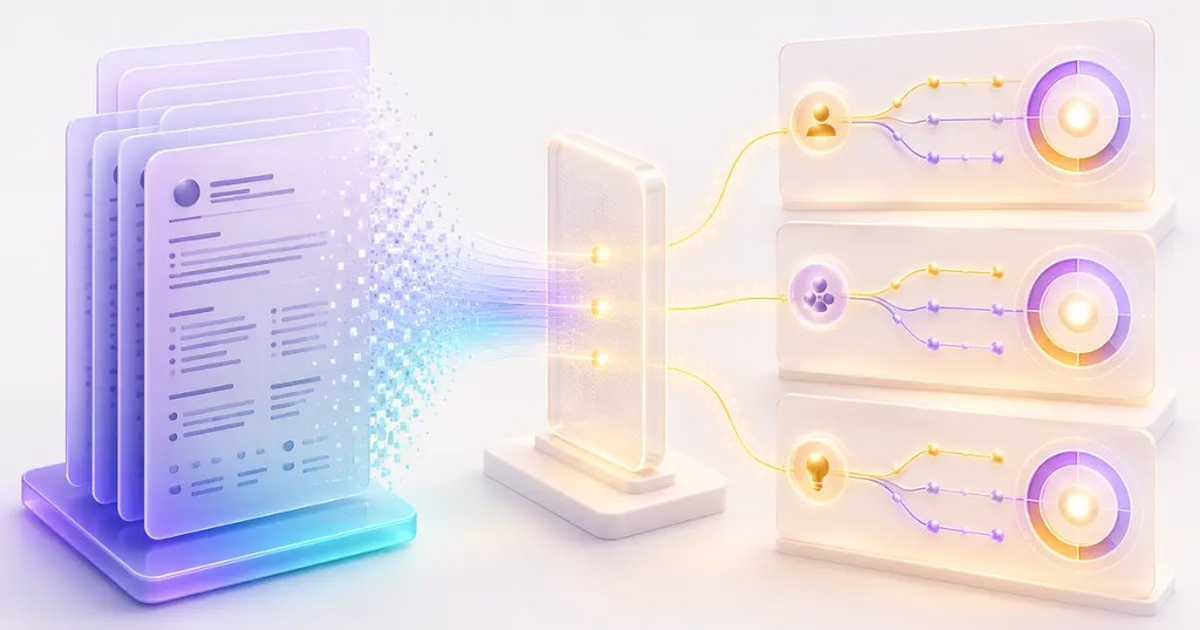
How do you assess candidates after AI resume screening? Use the resume to qualify, not to prove fit. The pile looks the same. After qualification, see how they use soft skills as they do the job, rank on what they did, and share evidence with hiring managers before the live interview.
Ashby and Indeed market data, Sackett validity scores, a signal gap by skill, psychology on polished text, and a five-step workflow for talent acquisition teams after the resume screen.
Introduction
The resume used to be where hiring started. Generative AI changed what that document means.
Applications per hire roughly tripled since 2021. About seven in ten job seekers now use GenAI on applications. CVs still check eligibility. They no longer show how someone communicates, decides, or collaborates under pressure.
What did resumes used to tell us?
Before 2022, a resume did three quiet jobs. It checked eligibility (location, work rights, must-have credentials). It showed career direction (roles, progression, gaps). And it gave a rough read on how someone writes and presents themselves.
Sackett et al. (2022) pooled hundreds of hiring studies and scored each method on one question: how well does it predict who will perform on the job? A perfect score would be 1.0. Unstructured phone screens land around 0.19. Resumes were never tested that cleanly, but teams used them the same way: fine for sorting people in or out, not for proving communication, teamwork, or judgment.
That was fine when writing the resume took effort. Effort was a small signal of its own. When anyone can generate fluent prose in seconds, that signal disappears. What remains is a formatted document that looks professional and says very little about how someone actually works.
How did AI change hiring, wave by wave?
ChatGPT launched in November 2022. The market did not flip overnight. Change came in waves, and each wave had a reaction on the other side.
Each row in the waves table is a move on one side and a counter-move on the other. The volume chart shows the pile growing faster than recruiter headcount. For the full automation loop between candidates and employers, see our hiring after AI piece. Here we focus on what to run once someone passes the resume screen.
What happened on the candidate side?
Indeed Hiring Lab (2025) breaks down where candidates use GenAI across the hiring process: polishing the CV (72%), tailoring answers to the post (68%), interview prep (54%), and auto-apply tools (41%).
Field et al. (2023) ran a field experiment on job search. When researchers lowered the psychological cost of starting an application, submissions rose about sixfold. Interview rates per application did not rise the same way. More applications, same number of real conversations.
Most candidates are responding to silence and rejection cost, not trying to trick recruiters. AI makes applying feel less hopeless. The tradeoff is sameness: when everyone can sound equally confident on paper, paper stops separating people.
What happened on the company side?
Recruiters did not wake up one morning wanting more software. They got hit by sameness at scale first. Surveys from 2025 and 2026 show how teams changed their stacks in response.
Heavy automation at the top of the funnel bought speed. It did not buy confidence. Greenhouse (2026) found 38% of applicants withdrew when an AI interview was required. Willo (2026) puts behavioral interviews with real examples at the top of what recruiters trust today (68%), ahead of culture-fit buzzwords and portfolios alone. Speed and trust pulled in opposite directions.
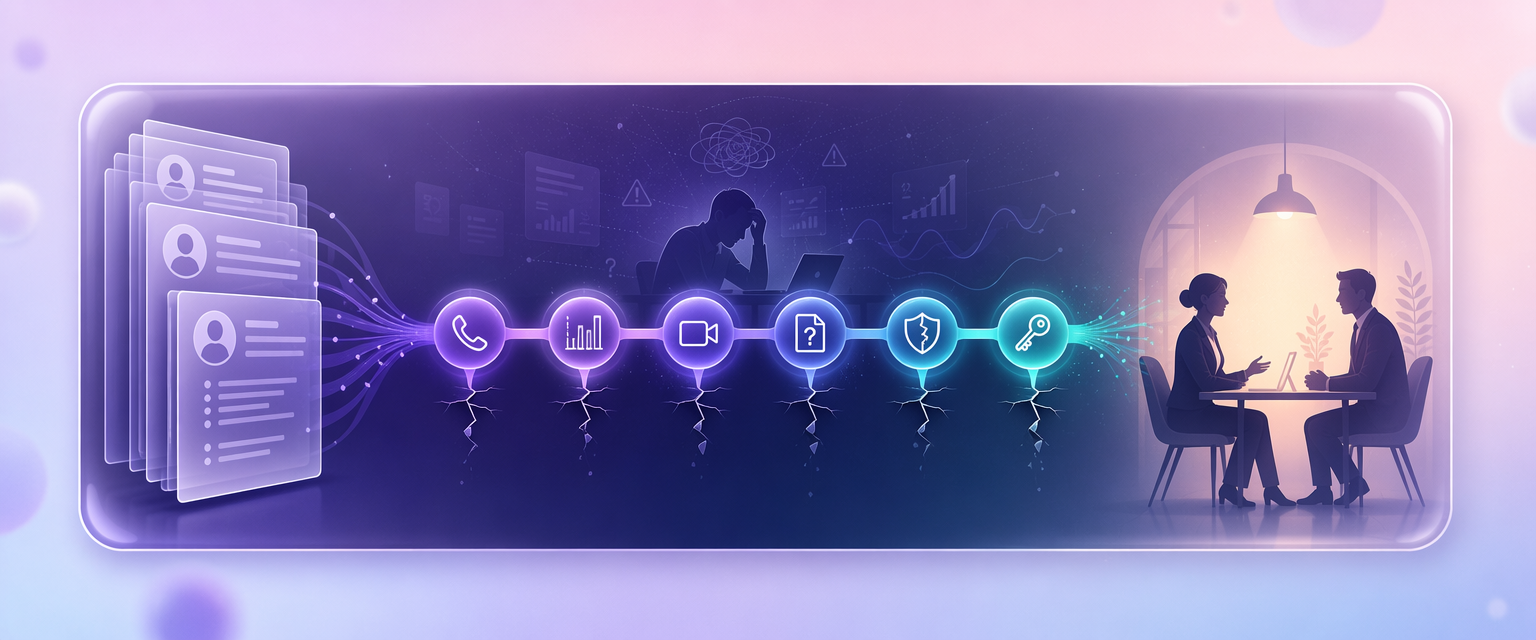
That trust gap sits in the same unnamed middle step our six funnel gaps research maps between qualification and the hiring manager interview.
Where is the signal gap now?
For each skill you care about, what evidence can you actually collect before the manager interview?
Our European job-post study found teamwork in three of every four software engineer ads, while emotional intelligence appeared in fewer than one in fifty. Candidates prepare from the post. Interviewers often grade skills the post never named. After AI, that mismatch gets worse because the post and the resume can both be machine-written.
See the full dataset in Soft skills in European software engineer job posts.
Knowing what broke on paper is only half the answer. You still have to pick what runs after qualification. Most teams default to what they already use: another resume pass, a phone screen, or a one-way video tool. Compare those defaults on three things that matter once CVs are AI-polished: whether the step predicts performance, whether candidates finish it, and how easy it is to game with GenAI.
Read the comparison row by row. Phone screens are easy to schedule, but Sackett et al. (2022) finds they predict job performance weakly, around 0.19 on a 0-to-1 scale where 1.0 would be perfect. One-way AI video often loses people before they finish: about 55% completion in the surveys we cite. Job-built scenarios rank higher on both measures above: about 0.26 to 0.29 on predicting performance, and about 83% of candidates who start the task finish it. They are also harder to cram for overnight because the scenario is built from your job description and branches on what each person says.
Every source behind these numbers is in our cheat-proof assessment research.
What does the brain do with polished text?
Why does a perfect resume feel less trustworthy now? The market data above explains part of it: when seven in ten applicants use GenAI, polish stops meaning effort. Psychology explains the rest. How we read text has not changed, but what smooth writing represents has.
When hiring managers read self-descriptions, they use a mental shortcut researchers call the fluency heuristic. Writing that reads smoothly feels like proof of ability. That shortcut worked reasonably well when candidates spent hours drafting their own words. When ChatGPT produces the same smooth prose in seconds, the shortcut misfires. You still feel you are reading competence. You are often reading a template.
The same trust problem shows up after qualification, in the format you ask candidates to complete. Dickerson and Kemeny (2004) reviewed laboratory studies of stress. The strongest responses came when three things combined: the person knew they were being judged, they could not control the outcome, and the task felt like a performance test. Researchers call that social-evaluative threat.
One-way AI video interviews often combine all three. You record alone. You do not know how you are scored. Greenhouse (2026) found 38% of applicants quit when an AI interview was required. Structured job tasks with clear criteria and a human reviewer remove part of that threat. Candidates know what the task is testing, and a person remains accountable for who advances. IJSA (2025) finds candidates rate realistic work tasks highest for fairness. AI interviewers score lowest.
Dickerson and Kemeny (2004), Greenhouse (2026), and IJSA (2025) anchor the rows above. After AI resumes, choose steps where candidates can show job-relevant behavior, understand the criteria, and know a human reviewed the result.
How do I assess candidates after AI resume screening?
How do I hire when every resume is AI-generated? Use the resume to qualify, not to prove fit. The pile looks the same. After qualification, see how they use soft skills as they do the job, before the hiring manager interview. Rank on what they did, not on what they wrote. Keep a human accountable for who advances.
Five steps you can pilot on the next opening. Setup detail lives in our pre-interview behavioral assessment guide. Cost and format comparisons live in phone screen vs self-paced screening.
What should you measure instead of the resume?
You already measure technical work with clear tools. Coding tests for engineers. Certifications for regulated roles. Quota and pipeline data for sales. Dashboards tell you how the technical side performs.
Soft skills rarely get the same treatment. Hiring managers decide from phone calls, interview impressions, and notes like "communicates well." Two recruiters can read the same AI-polished resume and still disagree. The resume checks eligibility. It no longer shows how someone uses those skills on the job.
Replace that gap with skills in the work. After qualification, they write, create, and hand off. Score all 44 against the role, not a generic quiz. Share that evidence with hiring managers before they book a live hour.
That turns a gut feeling into something you can compare. Candidate A pushed back politely on a bad request. Candidate B missed the deadline trade-off. Both had fluent CVs. Only one showed judgment in the work. That is the signal that replaces the resume for soft skills.
Frequently asked questions
How do I assess candidates after AI resume screening?
Use the resume to qualify, not to prove fit. The pile looks the same. After qualification, see how they use soft skills as they do the job. Rank on what they did, share evidence with hiring managers, and keep a human accountable for who advances.
How do I hire when every resume is AI-generated?
Same workflow: qualify on basics from the CV, then see how they use the skills as they do the job before the manager interview. Rank on what they did, not polished text, and keep a human accountable for who advances.
Why do resumes fail after ChatGPT?
About seven in ten job seekers use GenAI on applications. Smooth writing no longer signals effort or skill. Recruiters see near-identical language across unrelated candidates, and applications per hire roughly tripled since 2021.
What are AI resume screen limitations?
AI resume screening ranks polished documents but cannot verify communication, judgment, or teamwork. CVs and job posts can both be machine-written to match each other. The screen checks eligibility; it does not replace seeing how they use the skills in the work after qualification.
How do you assess soft skills after AI resumes?
After you qualify, see how they use all 44 soft skills as they do the job. Score communication, judgment, and follow-through in the work, not in a questionnaire. Hiring managers get evidence they can compare before they book a live hour.
What should you measure instead of the resume?
Measure how they use the skills on the job: how someone replies to a teammate, handles a deadline, or hands off work. Score all 44 against the role, not a generic quiz. Soft skills for their own sake are meaningless.
How to hire when candidates use ChatGPT on resumes?
Fluent CVs are not proof of soft skills. After qualification, see how they use those skills as they do the job, rank on what they did, and share evidence with hiring managers before the live interview.
Methodology
Synthesis piece; no new primary dataset. We combine hiring-market statistics with peer-reviewed psychology, neuroscience, and behavioral-economics sources. Indexed bar charts labeled "literature synthesis" compare fairness facets across human vs algorithmic assessment; they are illustrative indices, not new survey data.
- Market volume: Ashby 2026 Talent Trends; NYT / LinkedIn 2025 application growth synthesis.
- GenAI adoption: Indeed Hiring Lab 2025; employer stack surveys 2025–2026.
- Validity estimates: Sackett et al. (2022) meta-analysis; unstructured phone screens score about 0.19 on a 0-to-1 scale.
- Candidate experience: Greenhouse Candidate AI Interview Report (2026); IJSA (2025) favourability ratings; Willo Hiring Trends (2026).
- Stress research: Dickerson and Kemeny (2004); Newman et al. (2020); Langer et al. (2022) on fairness and social presence in hiring steps.
- Job search behavior: Field et al. (2023) field experiment on application initiation cost.
- Cluster: hiring after AI arms race; pre-interview behavioral assessment guide; phone screen vs self-paced screening; six funnel gaps; cheat-proof assessment.
We interpret; we do not claim causation from cross-sectional surveys. Where vendors disagree, we cite the published number and note the limit.
More in Recruitment

Latest on the blog