Boost Workplace Success with Empathy
By WiseWorld

Empathy is essential for enhancing team cohesion, leadership, and employee engagement in today’s workplaces. The “Nearsighted Empathy” study shows that higher empathy levels make colleagues feel closer, improving collaboration and trust. Implementing empathy-centric policies, creating inclusive workspaces, and using AI-based empathy training can strengthen emotional intelligence and drive organizational success. Prioritizing empathy fosters a harmonious and productive environment, leading to greater achievements and a positive company culture.
In today’s rapidly evolving workplace, the ability to connect with colleagues on a deeper emotional level is becoming increasingly vital. The groundbreaking research presented in the Scientific Reports article, “Nearsighted Empathy: Exploring the Effect of Empathy on Distance Perception,” sheds new light on how empathy not only strengthens emotional bonds but also physically alters our perception of those we connect with. These revelations are poised to transform our understanding of workplace dynamics, leadership, and team cohesion.
A Closer Look at the Study
The study delves into the intricate relationship between empathy and spatial perception. Researchers discovered that individuals who experience higher levels of empathy perceive their empathetic counterparts as physically closer than they are. This phenomenon, termed “nearsighted empathy,” suggests that emotional connections can influence our subconscious spatial judgments. Conducted through a series of controlled experiments, the research measured participants’ perceptions of distance while varying levels of empathetic engagement were induced. The consistent finding that heightened empathy correlates with reduced perceived distance underscores the profound impact empathy can have beyond mere emotional interactions.
Practical Applications in the Workplace
Understanding that empathy can bridge not just emotional gaps but also perceived physical distances opens up innovative avenues for enhancing teamwork and collaboration. For leaders and HR professionals, this insight is invaluable. By fostering an environment where empathetic interactions are encouraged and nurtured, organizations can create more cohesive and unified teams. Practical strategies include:
- Empathy-Centric Policies: Developing policies that promote active listening, open communication, and mutual support.
- Inclusive Workspaces: Designing office layouts and virtual work environments that facilitate closer interpersonal interactions.
- Recognition Programs: Acknowledging and rewarding empathetic behavior to reinforce its importance within the corporate culture.
These measures transform the workplace from a mere collection of individuals working alongside each other to a tightly-knit community where collaboration thrives.
Learning by Doing: Empathy in Real-World Simulations
To translate the theoretical benefits of empathy into tangible workplace improvements, implementing training programs that simulate real-life interactions is essential. These simulations can present employees with diverse scenarios that mirror everyday challenges, allowing them to practice and refine their empathetic responses. For instance:
- Role-Playing Exercises: Employees take on different roles to understand various perspectives within the team.
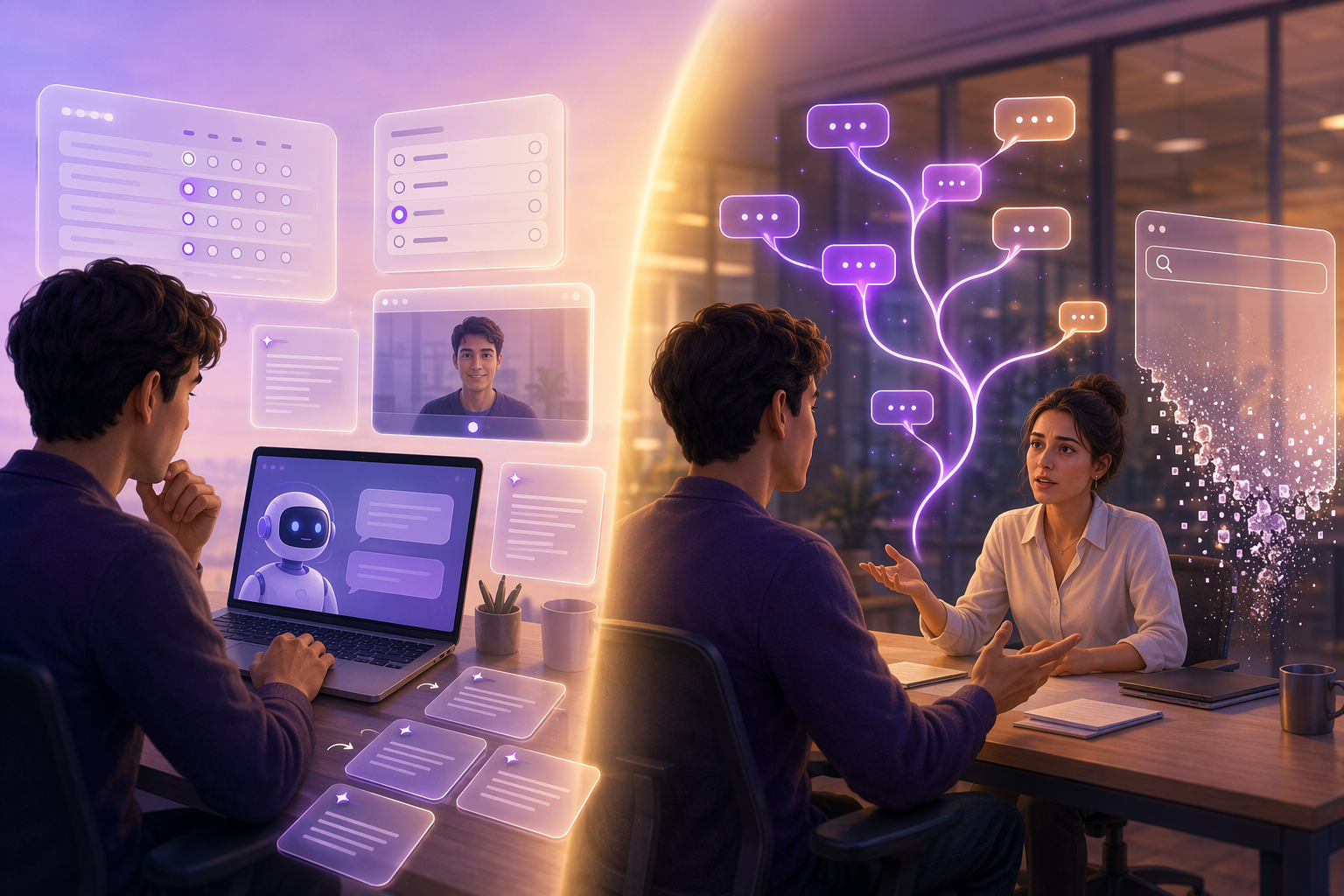
- AI-based Simulations: Immersive experiences that place individuals in the shoes of their colleagues, fostering deeper emotional connections.
- Interactive Workshops: Facilitated sessions where participants engage in activities designed to enhance their empathetic skills.
Such hands-on training not only deepens understanding but also equips employees with the tools to apply empathy effectively, thereby strengthening relationships and enhancing teamwork.
Real-Time Assessment and Development of Soft Skills with AI
Integrating empathy into the corporate fabric now goes beyond one-time training, thanks to modern AI-based tools that enable real-time assessment and continuous development. AI technology revolutionizes how companies evaluate and enhance soft skills by providing immediate, actionable insights that were once unattainable. Organizations can leverage AI in the following ways:
- Real-Time Feedback Systems: Implement AI-driven platforms that offer instant feedback on employees’ empathetic interactions, allowing for immediate improvement and reinforcement of positive behaviors.
- Dynamic Performance Metrics: Utilize AI to incorporate empathy as a key component in performance evaluations, ensuring its ongoing cultivation through data-driven insights and real-time monitoring.
- Adaptive AI Training Programs: Continuously update training initiatives with AI, which analyzes employee feedback and adapts to evolving workplace dynamics, providing personalized development paths for each individual.
Conclusion
The “Nearsighted Empathy” study not only enriches our understanding of empathy’s multifaceted effects but also underscores its critical role in the corporate world. By strategically integrating empathy through real-world simulations, continuous assessments, and empathetic policies, businesses can cultivate environments where emotional intelligence and professional prowess go hand in hand. In an era where the synergy of a team’s emotional and professional capabilities determines its success, these insights provide a roadmap toward more harmonious, innovative, and resilient workplaces.
Embracing empathy as a core organizational value paves the way for deeper connections, enhanced collaboration, and ultimately, greater achievements. As we continue to navigate the complexities of modern work environments, the transformative power of empathy stands out as a key driver of positive change and sustained excellence.
More in HR


Latest on the blog