Transforming Soft Skills Assessment with AI and Real-Life Simulations
By WiseWorld

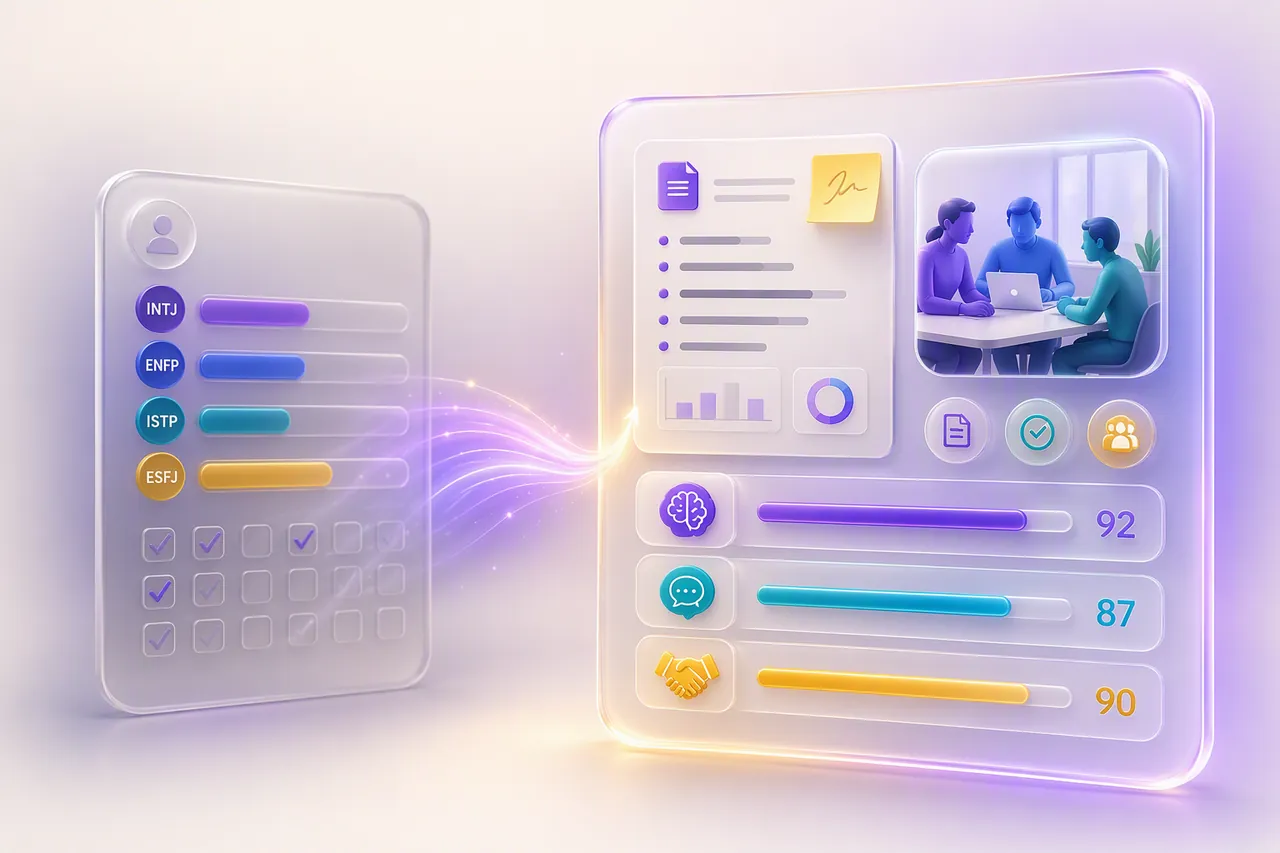
In today’s evolving job market, soft skills like communication, leadership, and problem-solving are crucial, often more so than hard skills. Traditional assessment methods can be biased, but WiseWorld revolutionizes this with AI-powered real-life simulations. Users engage in interactive scenarios, with AI evaluating all 44 soft skills and visualizing results through the dynamic PowerWheel chart. This innovative approach provides recruiters with aggregated, privacy-compliant data to make precise hiring decisions. WiseWorld sets a new benchmark for soft skills assessment, offering a realistic, objective, and comprehensive evaluation of the modern job landscape.
Introduction Soft Skills Assessment

In a job market that’s evolving at breakneck speed, the value of soft skills has surged dramatically. As automation and AI transform industries, the ability to communicate, lead, and solve problems has become indispensable. This article explores why soft skills are critical, evaluates traditional assessment methods, and introduces an innovative solution - WiseWorld - that is redefining how we measure these essential traits.
The Increasing Value of Soft Skills
Soft skills - such as communication, leadership, teamwork, problem-solving, cognitive abilities, and work ethic - are becoming increasingly crucial in the modern job market. Evidence from recent studies underscores the significance of these skills in achieving career success.
A study conducted by Harvard University revealed that soft skills contribute to 80% of an individual’s career achievements, while hard skills account for only 20% (Harvard University, 2024). This underscores the dominance of soft skills in determining professional success.
In line with these findings, a recent Forbes report highlights that 84% of the workforce insists job candidates must demonstrate strong soft skills. This is particularly critical in larger organizations, where the figure rises to 90% (Forbes, 2024). Furthermore, Deloitte’s research supports this trend, noting that 92% of companies consider human capabilities or soft skills as important as, or more important than, hard skills in today's business environment (Deloitte, 2024).
These statistics illustrate a broader trend: as workplaces evolve to be more collaborative and complex, the ability to effectively manage interpersonal relationships and demonstrate leadership is becoming increasingly vital. With automation handling routine tasks, the uniquely human skills of critical thinking, empathy, and communication are emerging as key differentiators for both individual career success and organizational excellence.
Traditional Soft Skills Assessment Methods
Traditional methods of assessing soft skills include:
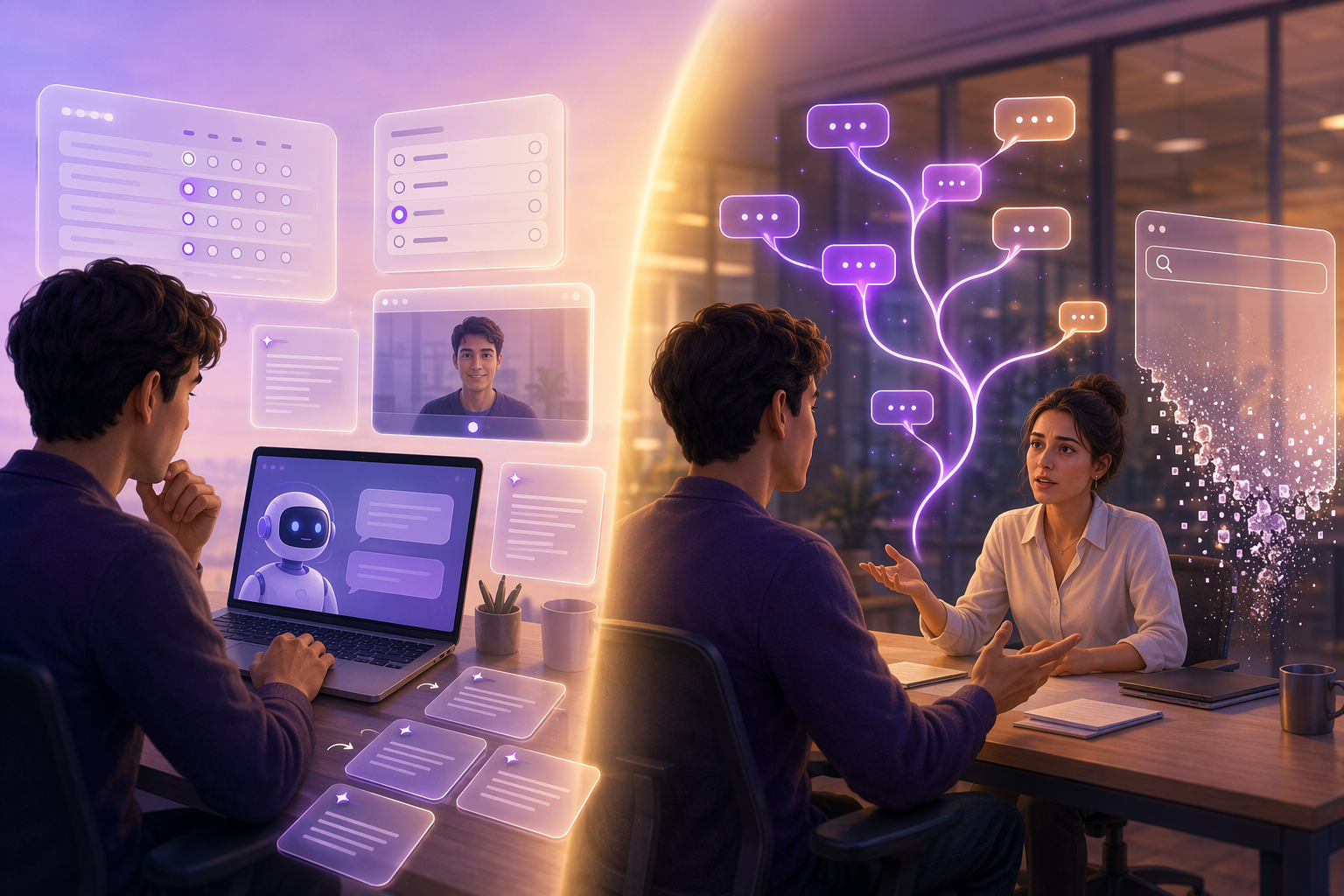
- Self-Assessment Questionnaires: These tools require individuals to rate their skills. While useful, they can be skewed by self-perception biases. For example, a candidate might rate their leadership skills highly without evidence of actual leadership experience.
- 360-Degree Feedback: This approach collects feedback from various stakeholders - peers, subordinates, and supervisors. While comprehensive, it can suffer from biases related to personal relationships and office politics. An employee might receive inflated ratings from friends or unflattering feedback from detractors.
- Behavioral Interviews: Candidates provide examples of past behavior to demonstrate their skills. Although this method offers insights into real-world applications, it relies heavily on the candidate’s ability to articulate past experiences, which may not always accurately reflect their current abilities.
These traditional methods often fall short in providing a nuanced and objective view of an individual's soft skills, due to inherent biases and limited scope.
Revolutionizing Assessment with AI and Real-Life Simulations
Enter WiseWorld - a pioneering platform transforming soft skills assessment through immersive, real-life simulations and AI technology. Unlike conventional methods, WiseWorld offers a gamified, open-world environment where users encounter scenarios that mirror real-life challenges.
How WiseWorld Works:
- Interactive Simulations: Users navigate through various storylines, making decisions that reflect their soft skills. For example, they might lead a team through a crisis or negotiate a complex deal, allowing the AI to analyze their performance in real time.
- AI-Powered Analysis: WiseWorld’s AI assesses all 44 soft skills across six core categories - Cognitive Abilities, Communication, Leadership, Work Ethic, Problem-Solving, and Teamwork. This analysis provides a detailed and objective evaluation of each skill.
- Bias Reduction: By focusing on real-time actions and decisions rather than self-reported data, WiseWorld minimizes biases and offers a more accurate assessment.
Visualizing Soft Skills with the PowerWheel
The PowerWheel is a standout feature in WiseWorld. This polygon-style chart visually represents a user’s soft skill profile, evolving with each simulation session. For instance, a user’s ability to lead effectively or solve problems will be reflected in the PowerWheel, which accumulates data from all sessions. This dynamic visualization helps users and employers understand strengths and areas for growth.
Using WiseWorld for Recruitment and Career Development
For recruiters and managers, WiseWorld offers a valuable tool for evaluating candidates. Recruiters can access aggregated soft skills data shared with user permission, to make more informed hiring decisions. This aggregated data ensures privacy and security, providing a comprehensive overview without disclosing individual specifics. Additionally, recruiters can generate custom invitation links for candidates to complete the assessment, thereby streamlining the recruitment process and ensuring a more efficient and objective evaluation.
Career Matching with Soft Skills
WiseWorld’s career matching feature allows users to compare their PowerWheel profiles with industry-specific benchmarks. For example, a marketing role might require high communication and problem-solving skills. Candidates whose profiles closely match these requirements have a higher likelihood of thriving in the role. While soft skills are not the sole determinant of success, aligning at least 70% with the reference profile can indicate a strong fit.
Comparing WiseWorld to Other Methods
When compared to traditional methods, WiseWorld’s approach offers several advantages:
- Realistic Assessment: Unlike static assessments, WiseWorld’s simulations provide a realistic context for skill evaluation.
- AI Precision: The use of AI ensures objective, detailed insights, reducing human biases.
- Continuous Feedback: The evolving PowerWheel allows users to track their development over time, a feature not commonly offered by traditional methods.
Other modern AI-based methods, such as VR simulations, also offer innovative assessment approaches but often lack the comprehensive, narrative-driven environment provided by WiseWorld.
Conclusion
As the job market continues to evolve, understanding and developing soft skills becomes crucial. WiseWorld’s cutting-edge approach to soft skills assessment - through AI and real-life simulations - sets a new standard for accuracy and insight. By adopting such innovative tools, both individuals and organizations can navigate the future of work with greater confidence and effectiveness.
More in HR



Latest on the blog